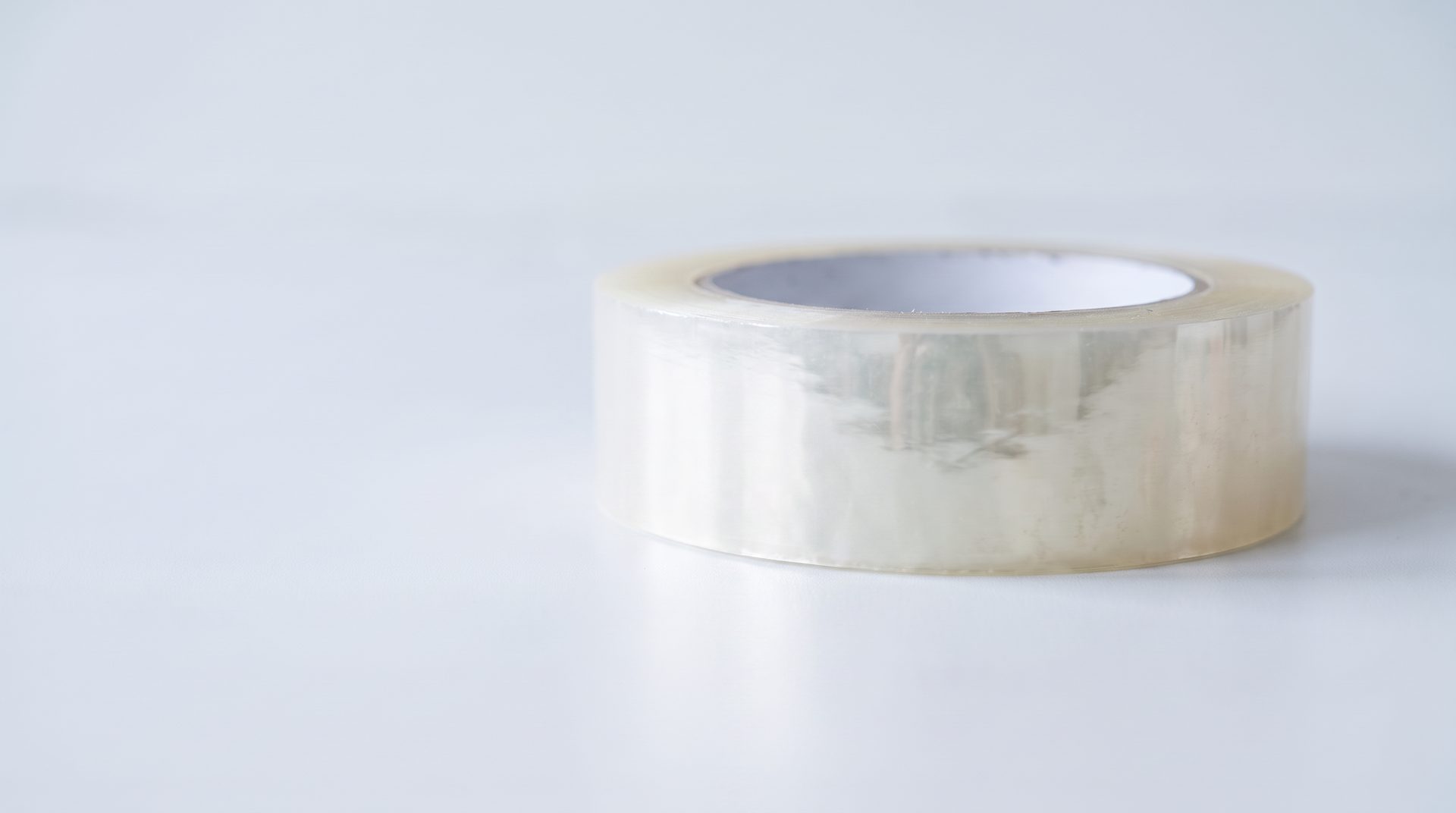
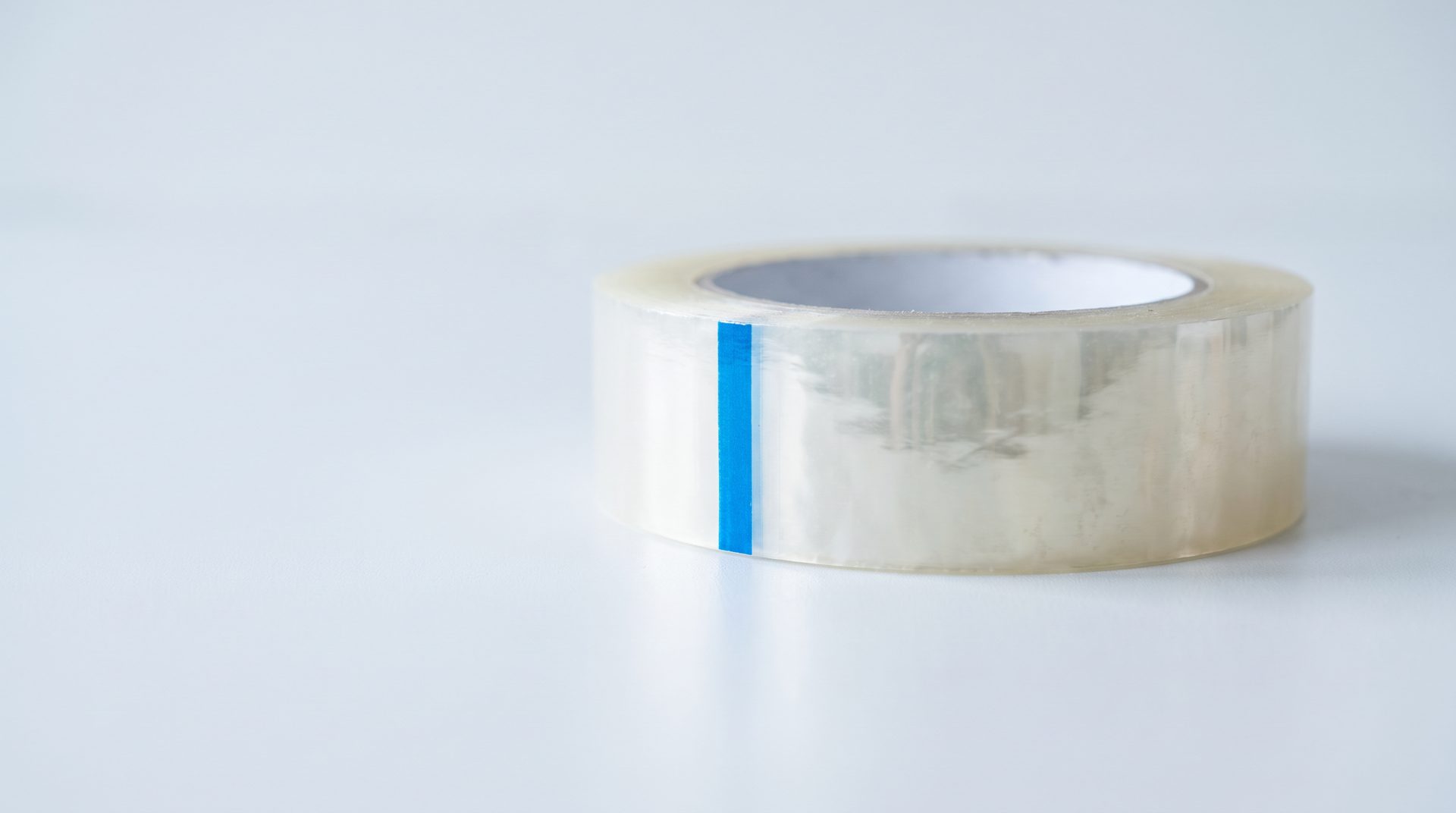
A redox indicator built into the adhesive turns the exposed edge of a clear tape roll blue on contact with air. No fingernail hunting. No torn starts. The end is simply visible.
Ordinary tapeWith the indicator
On a transparent roll the cut line blends into the wraps beneath it. Rotate, squint, scrape, and peel a ragged strip. It happens millions of times a day.
No one has published a study of this, so the inputs are yours to set. The parcel count is real; the rest are adjustable assumptions.
This covers shipping only. Office, household, medical and gift-wrap tape add more.
Only the parcel volume comes from a published source. Search frequency and duration are assumptions you can change. A widely shared claim that "the U.S. wastes 2 million hours a year" finding the start of tape rolls comes from a satirical headline in The Onion and is not data.
Somewhere on this clear roll is the loose end. Click where you think it is. Then switch the indicator on and see the difference.
The adhesive layer carries a redox indicator held in its colorless, reduced form inside the wound roll. Where the adhesive edge meets the atmosphere, the dye oxidizes back to its color.
A brief UVA exposure reduces the dye to its colorless form. The tape is wound and looks like any clear tape.
Tearing or cutting exposes the adhesive at the terminus. Oxygen in the air reaches the indicator at that edge.
The oxidized indicator shows through the transparent liner, marking the loose end on the outside of the roll.
All five appear in the patent's tables as indicators that are colored when oxidized and colorless when reduced. So color is a branding choice.
The curve is fitted to published methylene-blue film data (Lee, Sheridan & Mills, Chem. Mater. 2005): about 50% color at ~1,000 s and essentially full color by ~3,500 s. Other dyes would need their own testing.
Independent claim 1 covers the product itself. Click each element to see where it sits in the tape.
The whole claimed article: a roll of tape made of the layers below.
| Title | Adhesive tape roll with color-changing dye |
|---|---|
| Patent no. | US 12,606,725 B2 Active |
| Application | US 18/388,033 |
| Priority date | November 21, 2022 (provisional 63/384,529) |
| Filed | November 8, 2023 |
| Granted | April 21, 2026 |
| Projected expiration | June 1, 2044, with maintenance fees paid |
| Inventors | David Franklin Koravos, Audrey Dickinson, Alder Ensberg |
| Classification | C09J 7/30 · C09J 7/40 · C09J 11/06 · C08K 3/22 |
| Full text | Google Patents ↗ |
The feature adds no step for the user and sits in a layer manufacturers already coat. Leading brands already market "easy start" tape, which shows buyers pay for this benefit.
Carton-sealing tape for e-commerce, warehouses and moving.
Desk and gift-wrap tape, where the edge hunt is a daily annoyance.
Clear surgical and lab tapes handled with gloves.
A visible, demonstrable feature for a store brand to own.
Clear protective and splicing tapes on job sites and lines.
Household and craft rolls sold on one easy-to-show benefit.
Pick the structure that interests you. It carries into your inquiry below.
An illustrative animation of the invention described in U.S. Patent 12,606,725. It visualizes the concept and is not footage of a production sample.
Tell us who you are and what you're considering. We respond to adhesive manufacturers, consumer brands, retailers and IP investors.
dkoravos@gmail.com